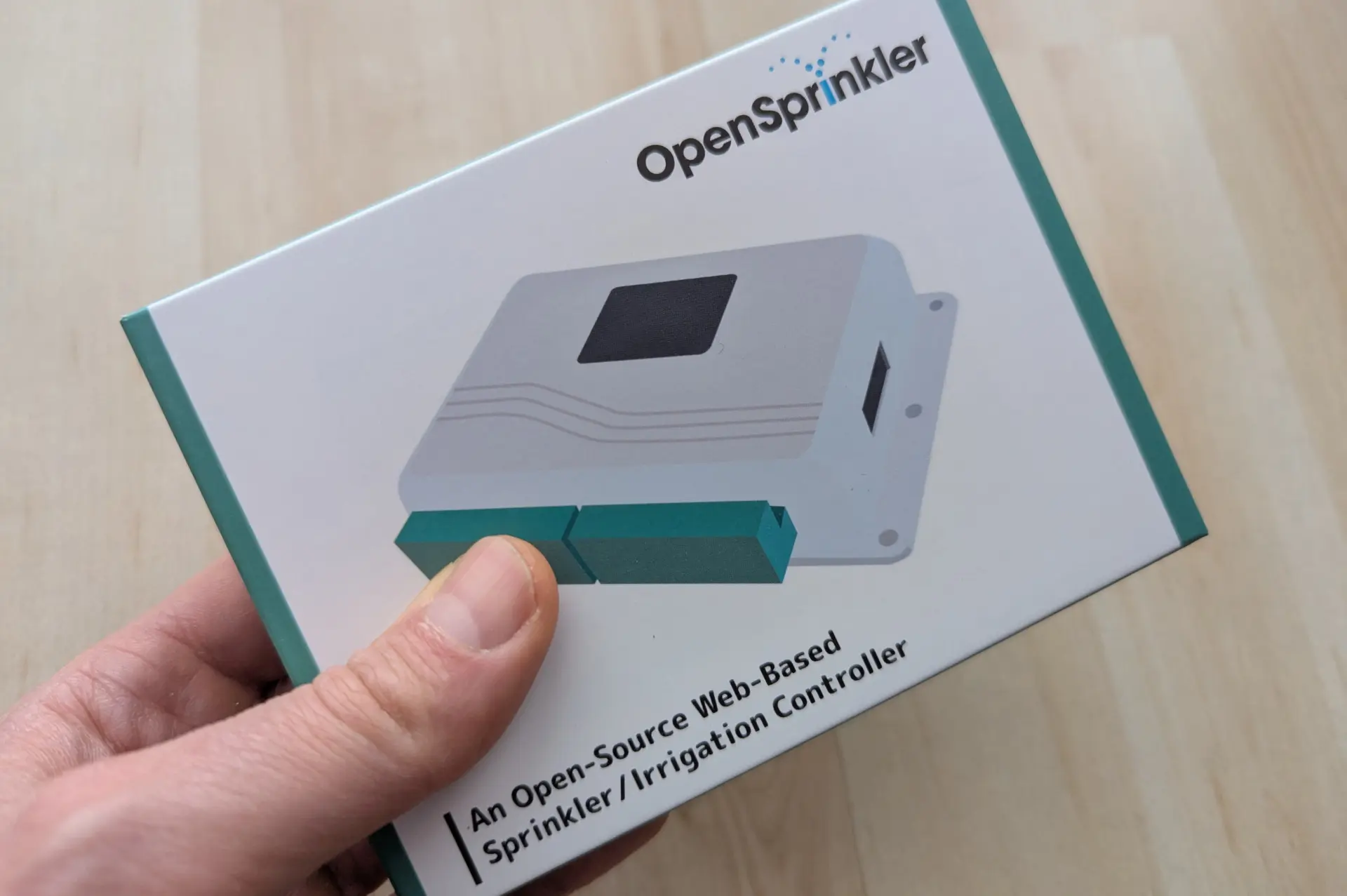
OpenSprinkler has upgraded its hardware, the irrigation controller is now available in version 3.4. In this article, I describe the new features compared to the previous hardware version 3.3.
OpenSprinkler not only receives regular software updates, but the hardware—the physical device itself—is also continuously improved. The last update was to version 3.3 in 2023, and now there’s another leap to version 3.4. The new OpenSprinkler 3.4 is immediately recognizable by its slightly altered appearance. It looks a bit more square, is slightly narrower, but taller and flatter than the old model. Dimensions in detail:
- OpenSprinkler 3.4: Length 125 mm, Width 79 mm, Height 25 mm
- OpenSprinkler 3.3: Length 140 mm, Width 56 mm, Height 33 mm
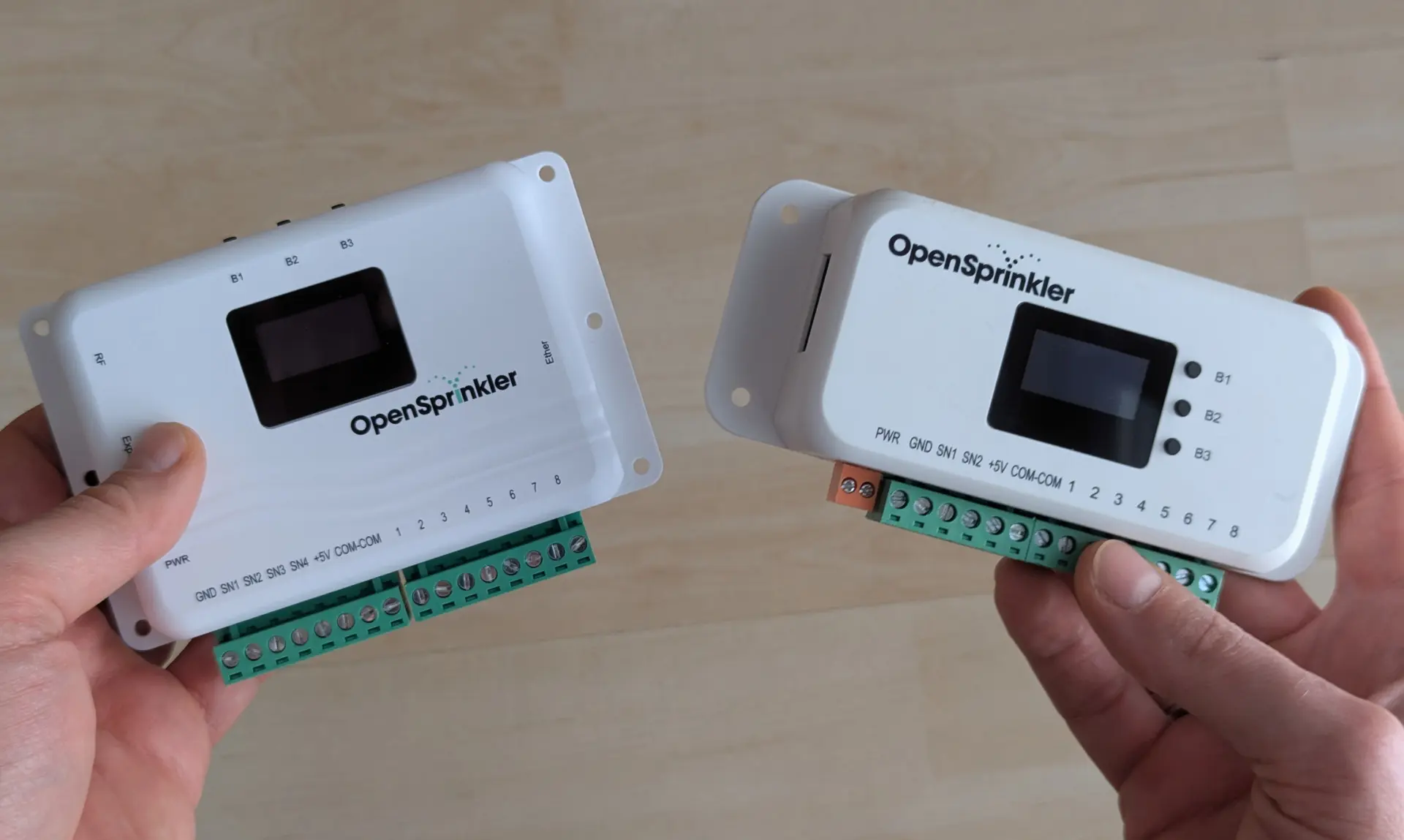
The new model is on the left, the old model on the right.
Technical changes in detail:
2 new sensor inputs
The OpenSprinkler 3.4 now has 4 sensor inputs instead of the previous 2. This allows for the connection of more sensors. However, a software update is still required so that the software offers the two additional ports for selection; this should be released soon.
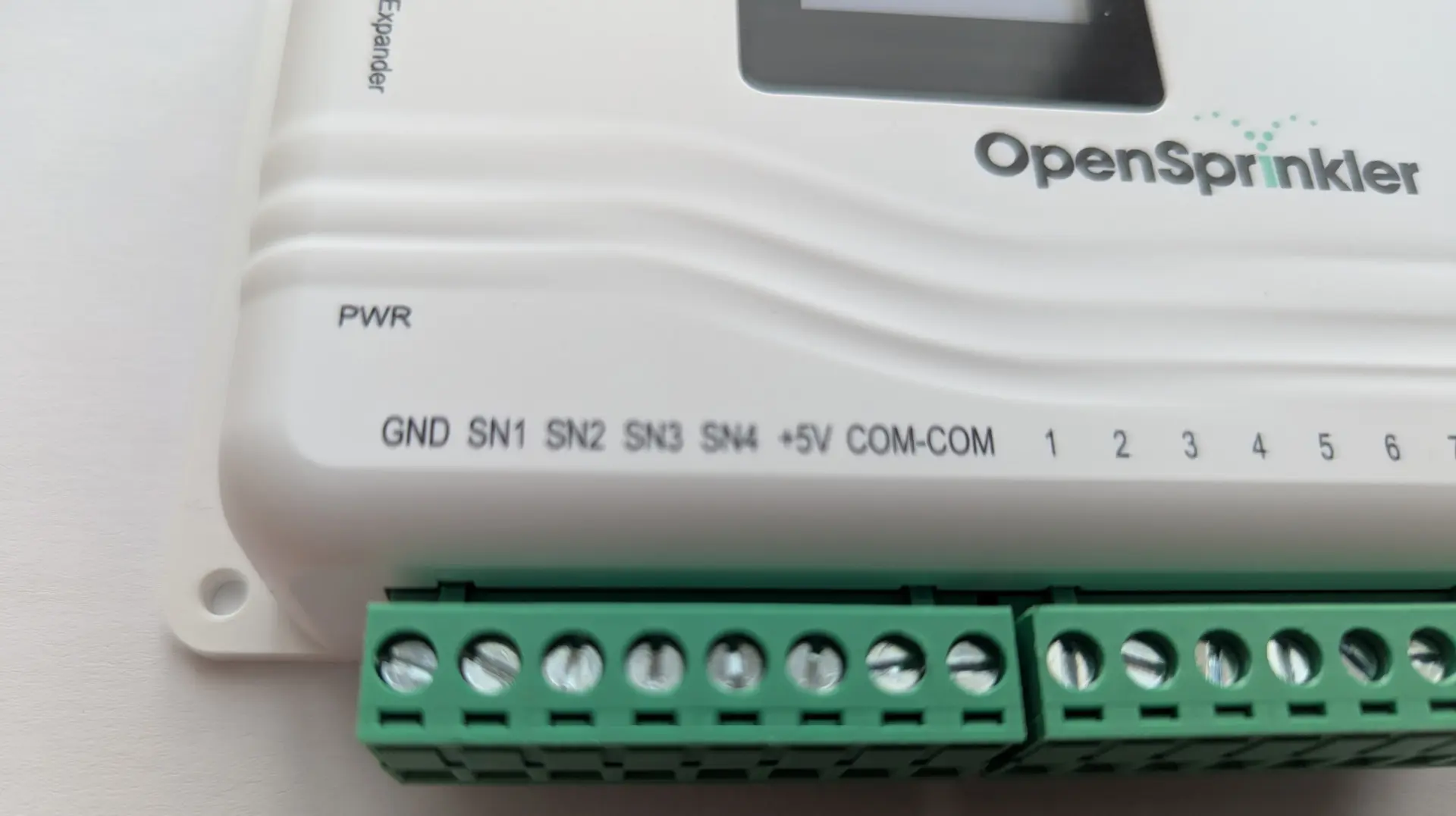
Now 4 instead of 2 sensor inputs (SN1 to SN4)
Connection option for Ethernet module
For OpenSprinkler version 3.0 and later, a wired LAN connection was not originally planned, based on the assumption that a web connection could be made using the integrated Wi-Fi functionality. However, it was underestimated that many users still prefer a reliable wired connection.
Therefore, an improvised Ethernet port was added inside the device with OpenSprinkler 3.3, which could be used with a little tinkering. OpenSprinkler 3.4 now makes this significantly easier by providing a user-friendly Ethernet connection via a ribbon cable port on the right side of the device.
It would be even better, of course, to install an Ethernet port there instead of the ribbon cable port. As it stands, the additional Ethernet module shown below is still required, costing approximately $25.
-
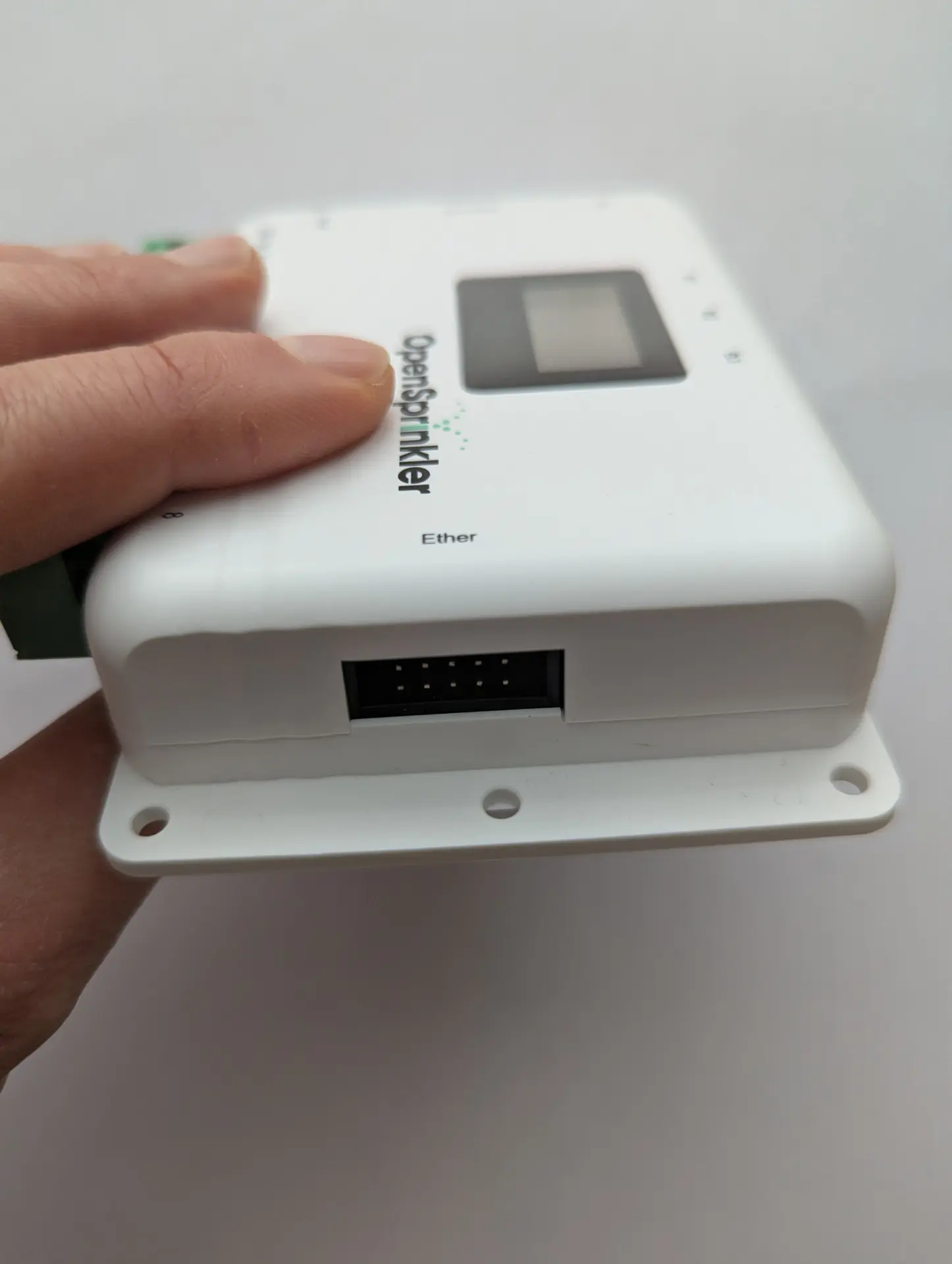
- Ribbon cable port for Ethernet connection
-
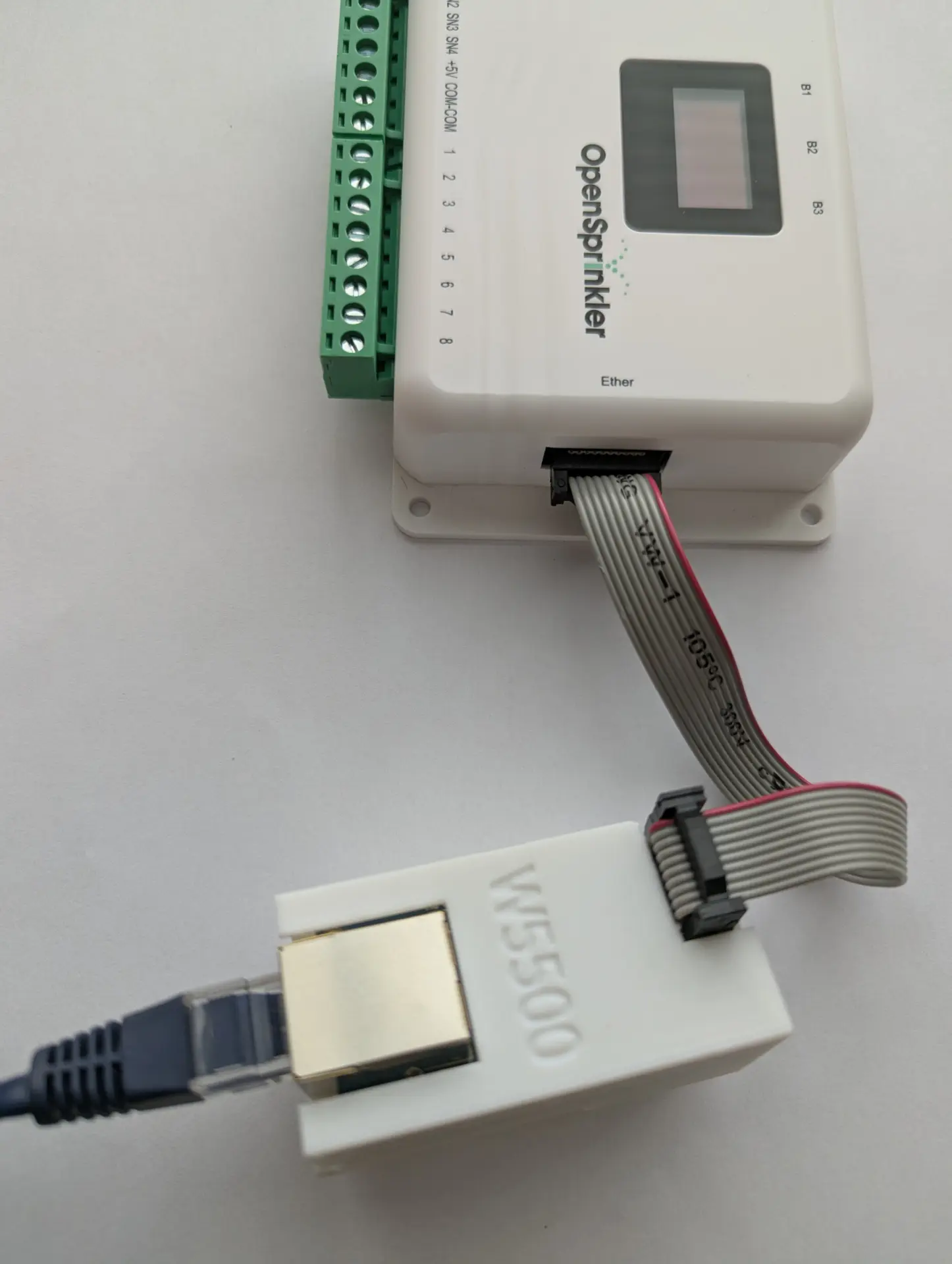
- OpenSprinkler with connected Ethernet modul
Switching from a two-layer to a single-layer circuit design
Not something that directly benefits the user, but interesting background information: OpenSprinkler previously used a two-layer circuit design, consisting of an upper logic board and a lower driver board.
This was originally intended to allow for interchangeable driver boards (AC, DC, and Latch) to connect different solenoid valve types via the same logic board. Using only one board now significantly simplifies assembly, enabling more efficient and time-saving manufacturing.
Power Supply Connection
The power supply is no longer connected directly via the cable wires, but rather via a more user-friendly barrel connector. This eliminates the need to strip the wires; instead, a standard, readily available connector can be used.
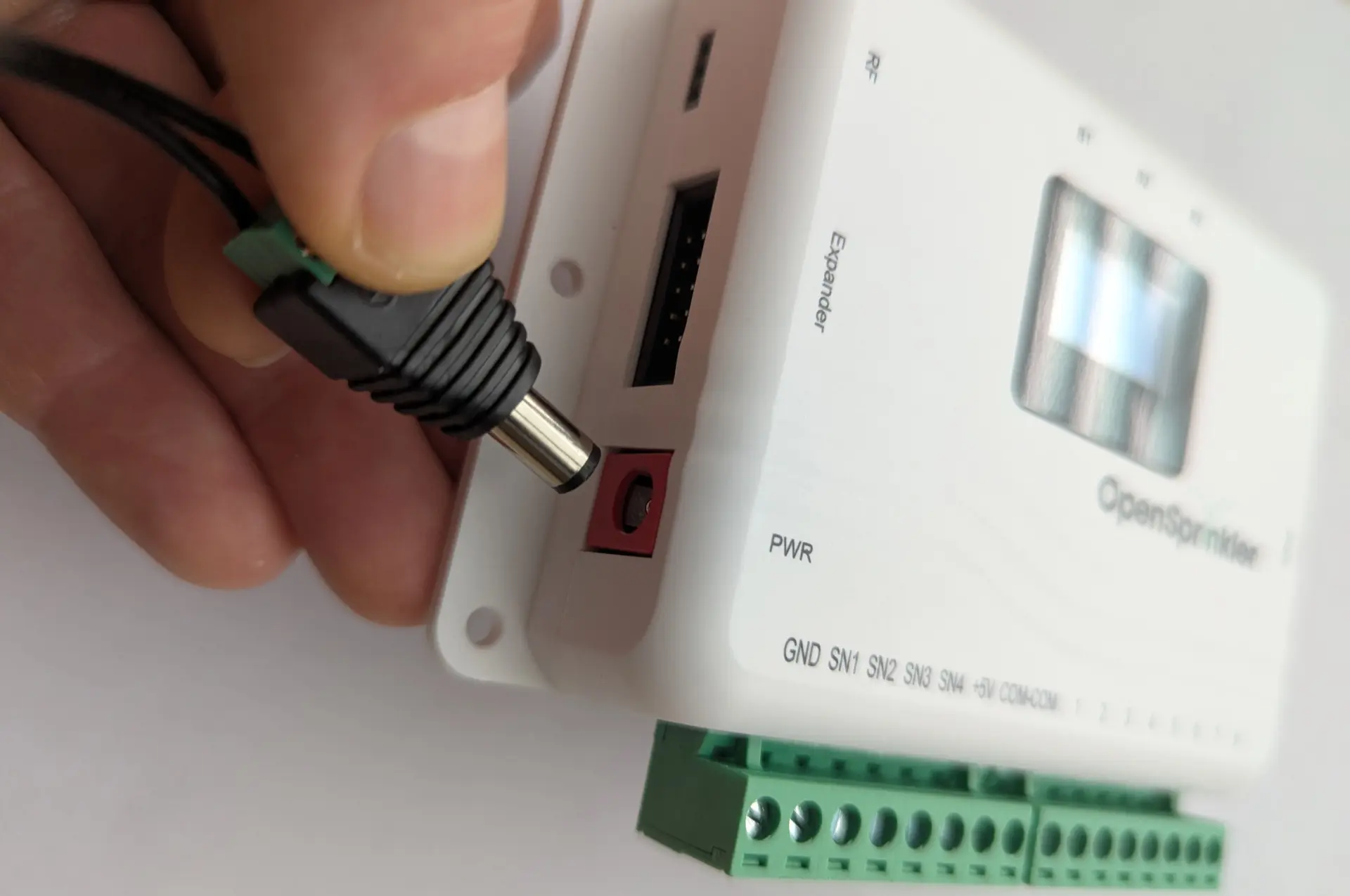
New Barrel Connector
USB 3.0 Power Connection on the DC Model
The OpenSprinkler 3.4 continues to be available as an AC (alternating current) and DC (direct current) model. The Latch model, previously offered as a third option, is no longer available for version 3.4. This latch model is required for use with the typical 9V solenoid valves for battery-operated irrigation controllers, which are often marked with the word “Latch.” The latch model from its predecessor, OpenSprinkler 3.3, is still available for this purpose.
At first glance, the DC model appears almost identical to the AC model, with the key difference being that it now features a modern USB 3.0 input instead of a barrel connector for power.
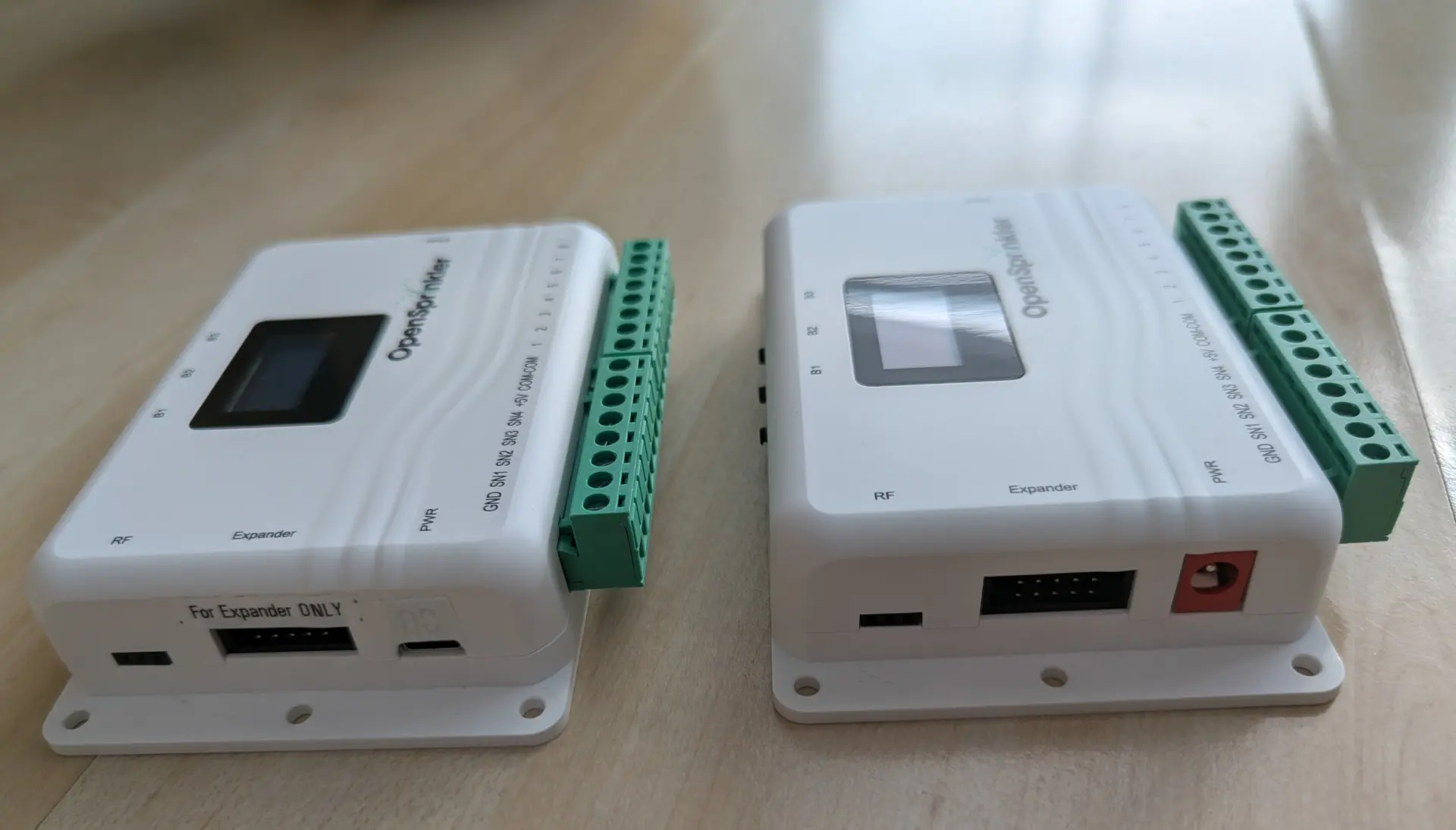
On the left, the DC model with the USB 3.0 connection; on the right, the AC model with the barrel connector.
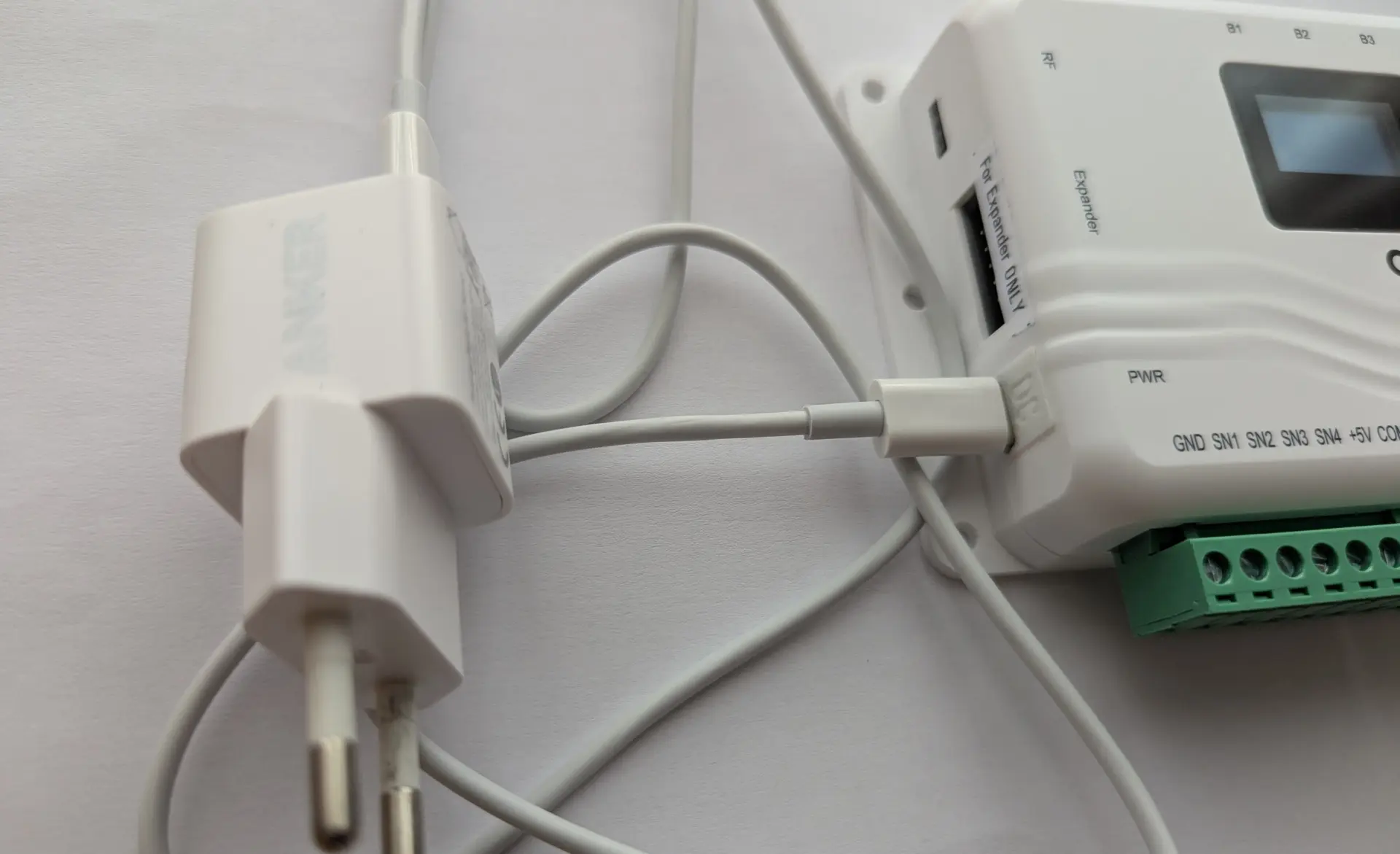
OpenSprinkler 3.4 DC with power plug attached.
This connection eliminates the need for specific power supplies; the controller can simply be plugged into a wall outlet using the standard USB 3.0 connector. Therefore, the OpenSprinkler DC model is generally preferable to the AC model. The DC model can switch both standard 24V AC solenoid valves and non-holding DC solenoid valves, and it also operates more energy-efficiently than its AC counterpart.
The AC model, on the other hand, can only switch 24V AC solenoid valves. This model should only be used if you intend to use the computer to control a pump start relay, as the DC version is not compatible with all pump start relays available on the market.
Conclusion
OpenSprinkler 3.4 brings some excellent improvements! Particularly noteworthy are the two additional sensor inputs, the improved Ethernet connectivity, and especially the simpler power supply with a barrel connector on the AC model and, even more importantly, the new USB 3.0 port on the DC model.
If two sensor inputs are sufficient for your needs and you don’t plan to connect your computer directly to the LAN, then the predecessor model 3.3, which is still available in some places, represents a worthwhile and affordable alternative due to the significant price reduction now offered.
Note: Readers of this blog are offered a 10% discount by the OpenSprinkler Shop when purchasing an OpenSprinkler or OpenSprinkler Pi. Use the coupon code OS-9A732A when ordering!